
What Are Self-Compassion Statements
Life can feel heavy when your inner critic never stops talking. Self-compassion statements are simple, kind phrases you say to yourself when you feel broken, lost, or not good enough. They work like a warm hug from your own heart. Research from Psychology Today shows that self-compassionate phrases reduce anxiety and depression fast. These positive self-talk phrases help you heal from the inside out. Practicing daily self-kindness affirmations trains your brain to be your own best friend. Kristin Neff, the leading self-compassion researcher, explains that self-compassion has three parts: self-kindness, common humanity, and mindfulness. You deserve the same care you give others every single day.
Self-Compassion Statements For Hard Days
Hard days hit everyone. You feel stuck, tired, and like nothing is working. These self-compassion phrases for difficult times remind you that struggling is human, not shameful. Use these healing self-talk statements every morning or whenever the inner critic gets too loud.

- I am doing the best I can today, and my best is always enough for this moment.
- It is okay to feel tired, sad, and broken because healing is not a straight road.
- I give myself full permission to rest without feeling guilty or unworthy right now.
- My struggles do not define me, and I am still worthy of love and deep kindness today.
- I forgive myself for every mistake I made because I was doing what I knew back then.
- Feeling this pain does not make me weak, it makes me a deeply human and real person.
- I choose to speak to myself with the same gentleness I give to my closest loving friend.
- Today is hard but I am stronger than this hard moment and I will get through it slowly.
- I am allowed to be imperfect and still believe I am a person fully worthy of great care.
Self-Compassion Statements For Anxiety And Overthinking
Anxiety tricks your mind into thinking the worst is always true. These self-compassion statements for anxiety break that cycle fast. Mindfulness self-compassion practices paired with these calming inner voice phrases can lower your stress hormone cortisol. Bookmark this section and read it during your next anxious episode for quick emotional relief.

- My anxious thoughts are not facts, and I do not have to believe every single one of them.
- I breathe slowly and remind myself that I am safe, warm, and okay in this present moment.
- Worrying does not protect me, but being kind to myself actually makes me more resilient today.
- I release the need to control everything and trust that life will unfold in the right way.
- My mind is tired from overthinking, so I choose rest, calm, and deep self-compassion right now.
- I am not my worst thoughts, I am the kind person who notices them and gently lets them go.
- Every emotion I feel is valid and I do not need to fix myself to be worthy of peace today.
- Anxiety visits me sometimes but it does not get to stay and rent space in my mind forever.
- I am learning to sit with discomfort without judging myself, and that itself is real brave growth.
Self-Compassion Statements After Failure Or Mistakes
Failure feels awful. Your chest tightens and your brain replays every wrong move on repeat. These self-forgiveness affirmations and self-compassion phrases after failure remind you that mistakes are proof you tried, not proof you are worthless. Even Reddit communities on mental health show people healing through self-forgiving words daily.

- Making mistakes means I tried something bold, and that takes real courage every single time.
- I do not need to be perfect to be proud of myself and the honest effort I have shown today.
- This failure is teaching me something I could not have learned any other easier gentle way.
- I am more than my worst day and I refuse to let one bad moment write my whole life story.
- I treat this mistake the way a loving teacher treats a student who tried and stumbled today.
- My worth is never connected to my productivity, my results, or my past poor decisions at all.
- I failed at something, not at being a person, and that difference matters more than I know.
- I give myself the grace to grow slowly because real growth never happens in one single moment.
- Every setback I face is quietly setting me up for a comeback I have not yet seen or imagined.
Self-Compassion Statements For Low Self-Worth
Low self-worth whispers lies like “you are not enough” or “nobody really cares about you.” These self-worth healing statements and positive inner dialogue phrases fight back gently. Loving yourself is not selfishness, it is survival. Use these self-love affirmations for mental health daily to rebuild your inner foundation one kind word at a time.
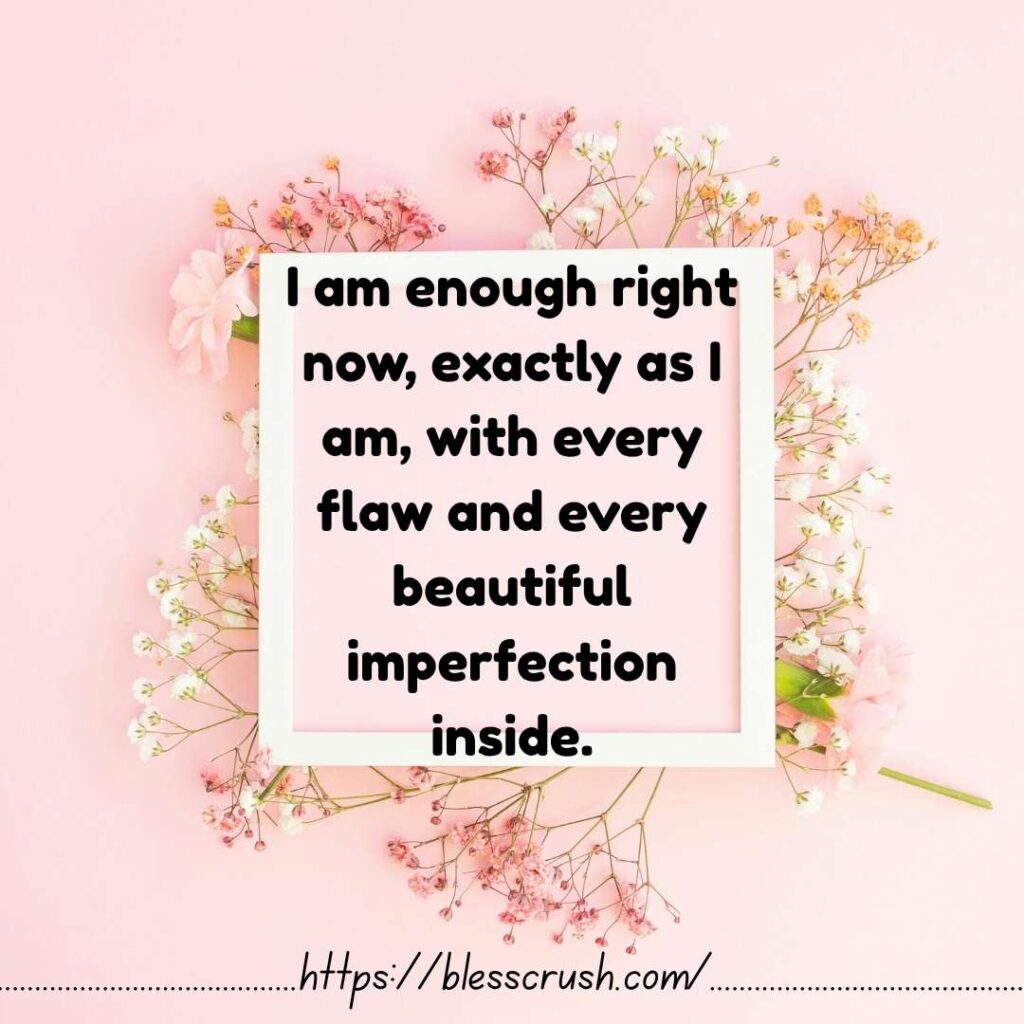
- I am enough right now, exactly as I am, with every flaw and every beautiful imperfection inside.
- I do not need anyone’s approval to feel that my life and my presence truly matter deeply.
- My value does not shrink just because someone failed to see or appreciate my true worth today.
- I belong in every room I enter, and I deserve every good thing that is coming into my life.
- Feeling small does not make me small, and I choose to see my own light even in dark days.
- I am worthy of healthy love, real respect, and deep belonging in every part of my life always.
- Self-doubt visits me but I am learning to doubt my doubts more than I doubt my own greatness.
- I celebrate small wins because small steps forward still count as real and meaningful progress.
- Every version of me trying to heal and grow deserves kindness, not criticism or harsh judgment.
Self-Compassion Statements For Grief And Loss
Grief has no timeline and no rulebook. You do not have to be over it by now. These self-compassion statements for grief give your hurting heart full permission to feel without shame. Practicing emotional self-care phrases during loss is one of the most healing things you can ever do for yourself. As Wikipedia explains on the topic of grief, grief is a natural human response that deserves patience, not judgment.
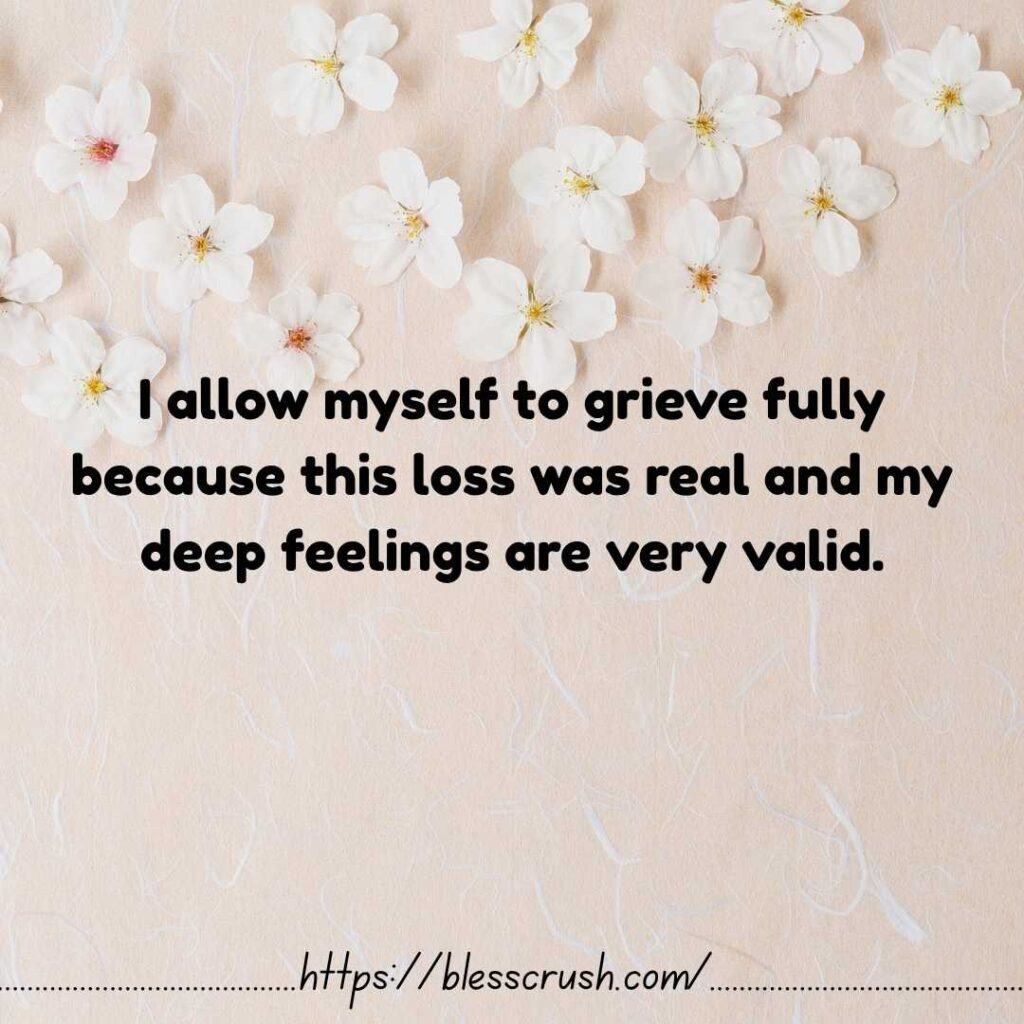
- I allow myself to grieve fully because this loss was real and my deep feelings are very valid.
- There is no right or wrong way to grieve, and I trust my heart to heal at its own gentle pace.
- Missing someone deeply is a sign of how purely and beautifully I loved, and that is worth honoring.
- I do not have to be strong all the time, and falling apart sometimes is a healthy human thing.
- I give my pain a safe space to exist without rushing it away or pushing my true feelings down.
- Healing from loss is not forgetting, it is learning to carry love forward in a brand new brave way.
- I am gentle with my grieving heart the same way I would be gentle with a hurting dear friend.
- This pain I carry is heavy but it does not mean I am broken, it means I loved someone truly well.
- I choose to honor my grief, take care of my body, and ask for help when the load feels too big.
Self-Compassion Statements For Daily Mindfulness Practice
Building a daily self-compassion practice changes your brain over time. These mindfulness self-compassion affirmations work best when you say them out loud every morning. Pair them with deep breathing for maximum emotional healing results. You can also explore self-compassion journaling prompts on YouTube to build a full morning routine fast.

- Today I choose to be kind to myself before I try to be kind to anyone else around me first.
- I start this day with a gentle heart, open hands, and real compassion for everything I feel inside.
- My mental health matters and I commit to protecting my peace and energy every single new day.
- I pause, breathe, and remind myself that I am a whole worthy human in this present perfect moment.
- Practicing self-compassion is not lazy or weak, it is one of the bravest things I will do today.
- I notice my inner critic without arguing and lovingly choose a kinder and softer voice every time.
- I set a daily intention to treat myself the way I treat the people I love most in this whole life.
- Each mindful breath I take is a small act of deep love and self-respect I give to my own soul.
- I am a work in progress and progress, not perfection, is what this good life is truly all about.
Frequently Asked Questions
What are self-compassion statements used for?
They calm your inner critic, reduce anxiety, and help you heal from failure, grief, or low self-worth with kindness.
How often should I use self-compassion affirmations?
Daily use works best. Say them every morning or whenever negative self-talk and harsh inner criticism feels too strong.
Do self-compassion statements really work for mental health?
Yes. Research links self-compassion practices to lower depression, less anxiety, and stronger emotional resilience over time.
What is the difference between self-compassion and self-pity?
Self-compassion connects you to shared human experience. Self-pity isolates you and keeps you stuck in a victim mindset.
Can kids use self-compassion phrases too?
Absolutely. Simple self-kindness phrases help children build healthy emotional habits and stronger self-worth from a very young age.